


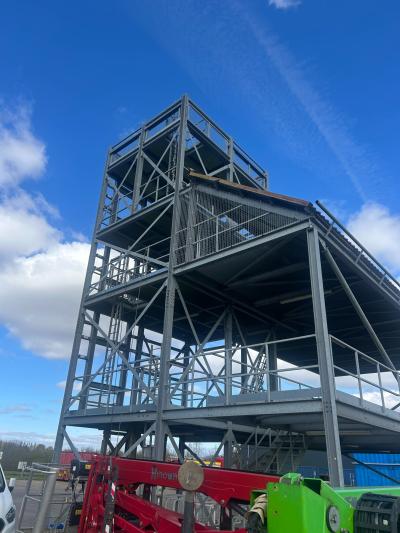
A training tower for Avon Fire & Rescue Service had become a prime roosting and nesting site for pigeons. The birds had established themselves across all levels of the structure, as well as within the concealed space between the mock roof and the external cladding. While this may seem like a minor nuisance at first glance, the reality was far more serious.
The accumulation of bird droppings created significant fouling throughout the tower, directly impacting firefighters using the facility. Surfaces became slippery and hazardous, increasing the risk of slips, trips and falls. In a setting designed for training and operational use, this posed a clear and unacceptable health and safety risk. Beyond the immediate dangers, prolonged exposure to bird fouling can also lead to structural deterioration and potential hygiene concerns.
Our Surveyor Adam Keig carried out a full site assessment to understand the extent of the issue and identify the most effective solution. The approach needed to be both robust and tailored to the unique design of the tower.
To prevent pigeons from accessing upper structural elements, we installed high-quality netting to the underside of each level. This effectively blocked entry to the beams above, eliminating key roosting points without interfering with the functionality of the tower.
In addition, we designed and constructed a bespoke metal framework to address the more complex access points. This included the installation of a custom-built door fitted with durable wire mesh, specifically engineered to seal off the mid-level area and the void between the mock roof and cladding. This targeted intervention ensured that pigeons could no longer enter or nest within these sheltered spaces.
The result is a clean, safe, and fully operational training tower, free from the hazards previously caused by pest birds. Just as importantly, the measures implemented provide a long-term solution, reducing the likelihood of re-infestation and ongoing maintenance issues.