


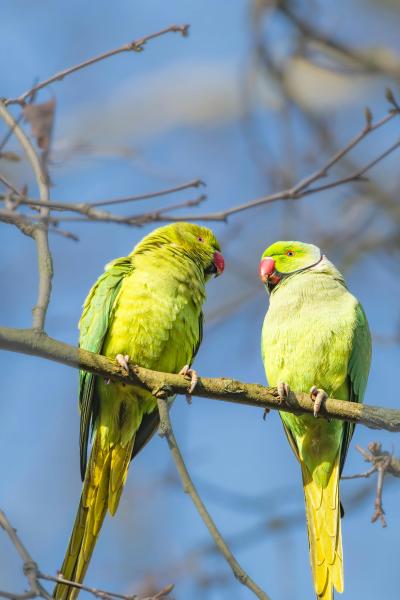
The sight of bright green parakeets screeching through Britain’s parks might feel like a touch of the tropics, but their growing numbers are becoming a serious headache. Ring-necked parakeets - now firmly established in parts of England, especially around London and the South East - are no longer just an urban curiosity. They have also been seen in places like Manchester and Glasgow. For many residents, farmers and conservationists, they’re an increasingly noisy, aggressive and disruptive presence.
One of the biggest issues is competition with native wildlife. Parakeets are cavity nesters, meaning they rely on holes in trees and buildings - the same limited ‘real estate’ needed by species like woodpeckers, nuthatches, starlings and some bat species. Parakeets are bold and can evict other birds from nest sites, reducing breeding opportunities for native species. As populations expand, that pressure on nesting space and food sources can intensify, particularly in areas where habitats are already fragmented.
They are also causing issues for property owners. A recent Springwatch programme featured a flock of parakeets clinging to a wall of a building and pecking at the mortar. Why? Because the mortar is a source of minerals and salts that the parakeets can’t get in their diet. In the Amazon you can see them doing the same thing on riverbanks.
There are other impacts too. Parakeets are heavy feeders and will strip fruit trees, raid garden bird feeders and damage crops such as cherries, apples and grapes. While the overall national economic impact is still debated, localised damage can be significant for growers and allotment holders - especially where flocks concentrate. They can also contribute to noise pollution in residential areas, with their loud calls causing complaints in neighbourhoods where roosting numbers are high.
The wider point is that parakeets are part of a broader pattern: pest birds in the UK can create real problems when populations swell or behaviours bring them into conflict with people. Feral pigeons foul buildings and pavements, spread parasites and drive up cleaning and maintenance costs for councils and businesses. Gulls, particularly in coastal towns and increasingly inland, can be aggressively territorial during breeding season, snatching food from people and nesting on roofs where their noise and mess become a persistent nuisance. Starlings, while native, can form huge winter roosts that create sanitation issues and disrupt transport hubs.
So, what can be done about parakeets and pest birds more generally? The most effective approach is prevention and management rather than panic. Limiting food sources is a key first step: discouraging excessive feeding in parks, using bird-proof bins and advising householders on smarter bird-feeder use can reduce unnaturally high concentrations. For growers, netting and targeted deterrents can help protect vulnerable crops.
Where parakeets are directly threatening sensitive native species or causing repeated damage, licensed control may be considered but it should be evidence-led, localised and carefully monitored. Habitat measures also matter: increasing the availability of natural nesting sites for native birds can reduce competition pressures. Finally, consistent public messaging is crucial. If communities understand that cute doesn’t always mean harmless, the UK can tackle the parakeet challenge - and other pest bird conflicts - in a way that protects wildlife, livelihoods and quality of life.
If you are experiencing pest bird problems at your premises, Cleankill can help. Go to www.cleankill.co.uk for more information or call 020 8668 5477 to arrange a free survey.